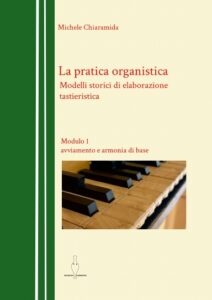
As a preparatory module within a broader educational programme, this course explores the principal procedures of keyboard performance practice from the sixteenth to the eighteenth century. Drawing on research into historical pedagogical traditions, it approaches learning as a gradual process of assimilating recurring patterns which, through practice and memorisation, foster spontaneous and informed musical competence.
The training of young musicians can thus be grounded once again in the progressive assimilation of harmonic progressions, contrapuntal models, and compositional procedures, internalised through listening, imitation, and daily practice.
This methodology aims to contribute to contemporary keyboard pedagogy by demonstrating how much of the repertoire that has come down to us, together with the technical and musical skills required to perform it, emerged from a shared pedagogical tradition in which musical knowledge was transmitted through established models and practices.
Reconstructing this system not only deepens our understanding of the origins of the repertoire, but also helps recover a different conception of musical education, one in which theory and practice are united through the daily exercise of the musical craft.
DOWNLOAD AN EXCERPT: organ practice_excerpt
Contents:
An overview, i
The role of the organist
Tones, modes and species
What is a chord?
Intevalls
Keyboards
Meantone and splitted keys
Strucuture of the text and methodological approach